Ad Links marked (Ad) are affiliate links. As an Amazon Associate I earn from qualifying purchases.
Products here are on topic, but we haven't tested them. Drawings are ours, not photos of the exact product.
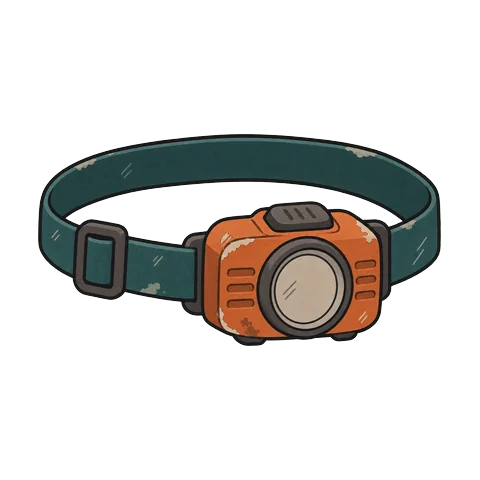
Rechargeable head torch
(Ad) See on Amazon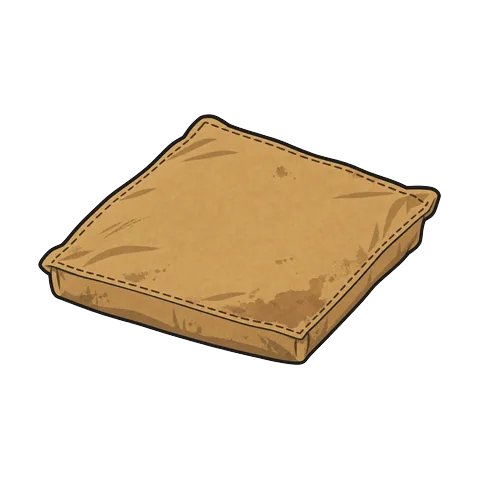
Water-activated flood bags
(Ad) See on Amazon
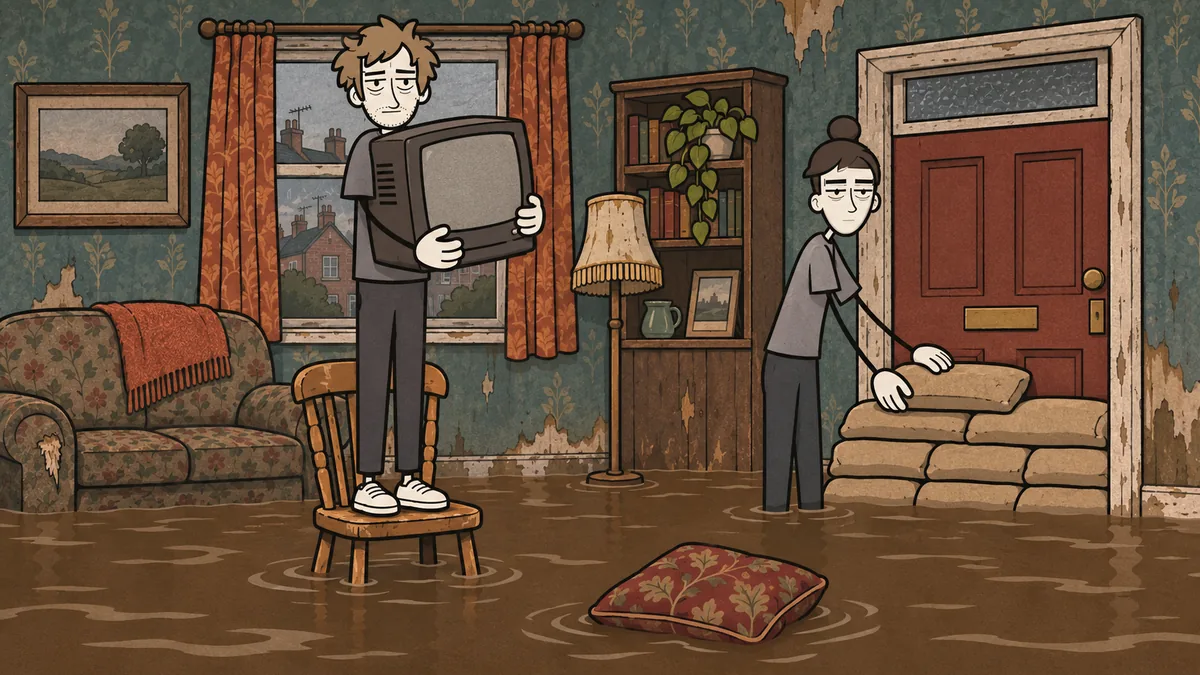
Flooding can happen even if you do not live near a river or the sea. This guide follows the advice for England. Scotland, Wales and Northern Ireland have their own guidance, so check yours.
Sign up for warnings
In England, the Environment Agency sends free flood warnings by phone, text or email. Floodline is on 0345 988 1188 (textphone 0345 602 6340), open 24 hours, and can sign you up by phone in England, Scotland or Wales. Online, Scotland's service runs through SEPA and Wales's through Natural Resources Wales. For Northern Ireland, GOV.UK points you to flood maps, and flooding is reported on 0300 2000 100, 24 hours a day.
In England you cannot get warnings for surface water flooding, sometimes called flash flooding. Ask your council.
What to prepare
- A flood plan, kept with spare medication, important documents and contact details.
- A bag of essentials you can reach easily: medication, a first aid kit, documents in resealable bags, a torch, bottled water, warm waterproof clothing and baby items.
- Know how to turn things off. The stop tap is usually where the water enters your home, or outside under a cover. The gas shut-off valve is usually next to the meter, and the electricity cut-off on the fuse board.
- Check your insurance covers flooding.
- Move sentimental or valuable things upstairs or high up.
What the warnings mean in England
- Flood alert: flooding is possible. Usually 2 to 12 hours ahead. Get ready to follow your plan, with insurance documents and medication to hand.
- Flood warning: flooding is expected. Usually 30 minutes to 2 hours ahead. Move family, pets and valuables to safety, upstairs or to higher ground. Turn off gas, electricity and water if it is safe, and never touch an electrical switch while standing in water.
- Severe flood warning: danger to life. Stay somewhere safe and be ready to evacuate. Call the emergency services if you or someone else is in immediate danger.
Thirty minutes is not long to carry a sofa upstairs, which is the argument for deciding now what you would save.
During a flood
Do not walk, cycle or drive through flood water. It may contain sewage and hide rubbish, broken drain covers and uneven ground. Be Ready says driving through flood water is the number one cause of death during flooding. Do not risk yourself to move a car or belongings.
If the emergency services tell you to leave, leave. Delay can put your life and your rescuers' lives at risk. If your home is unliveable, ask your council about emergency accommodation.
To report problems, call 105 for electrical hazards or power cuts (in Northern Ireland, NIE Networks on 03457 643 643). For a gas leak, call 0800 111 999 (0800 002 001 in Northern Ireland).
After a flood
Check with the emergency services that it is safe to return. Do not turn water, gas or electricity back on until a utility company or qualified engineer has checked them.
- Photograph the damage and the water line, and speak to your insurer before throwing anything away.
- Wear rubber boots, waterproof gloves, an apron and eye protection. Wash your hands with warm water and soap after each session.
- Do not run petrol or diesel generators indoors, because of carbon monoxide, and keep heaters and dryers well ventilated.
- Throw away food that has touched flood water.
- GOV.UK says to throw away fridge food after 4 hours without power and freezer food after 24. The Red Cross says a full freezer stays frozen for around 48 hours. After a flood, use the stricter rule.
Tiredness, poor sleep and anxiety are normal afterwards. For health worries, contact your GP or call NHS 111. Samaritans are on 116 123, 24 hours a day.
The short version
- Sign up for warnings; surface water flooding is not covered.
- Pack a bag and learn how to turn off your supplies.
- Stay out of flood water, on foot and in a car.
- Leave when told to, and call the emergency services if life is in danger.
- Get utilities checked before using them again.
This is general information. Official instructions for your area always come first.
One small job a week
A short email with what's new here and, now and then, one thing to sort out before it goes wrong. It takes minutes, and Harry won't do it.
About one email a week with safety tips and kit ideas. Unsubscribe any time. Privacy notice.
What we read
- GOV.UK: Get flood warnings by text, phone or email
- GOV.UK: Flood alerts and warnings, what they are and what to do
- GOV.UK: Prepare for flooding
- GOV.UK: What to do before or during a flood
- GOV.UK: What to do after a flood
- GOV.UK, Be Ready: Flooding
- UK Health Security Agency: Flooding and health, advice for the public
- SEPA: Flooding and Floodline sign-up
- Natural Resources Wales: Sign up to receive flood warnings
- nidirect: What to do if a flood happens
- nidirect: Energy, power supply and utilities
- NHS: Carbon monoxide poisoning (National Gas Helpline)
- NIE Networks: Power cut, faults and outage information
- British Red Cross: Power cuts