Ad Links marked (Ad) are affiliate links. As an Amazon Associate I earn from qualifying purchases.
Products here are on topic, but we haven't tested them. Drawings are ours, not photos of the exact product.
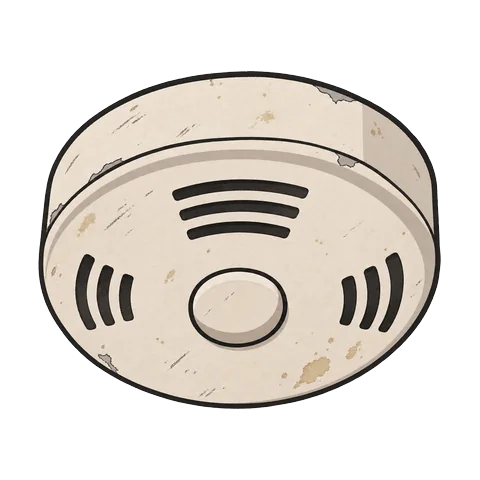
Smoke alarm
(Ad) See on Amazon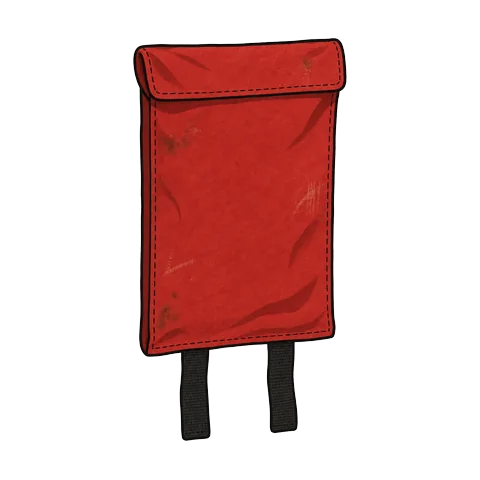
Fire blanket
(Ad) See on Amazon
The government's Fire Kills campaign puts it in three steps: get out, stay out, call the fire service. A plan is how you manage that at night, half awake.
Smoke alarms
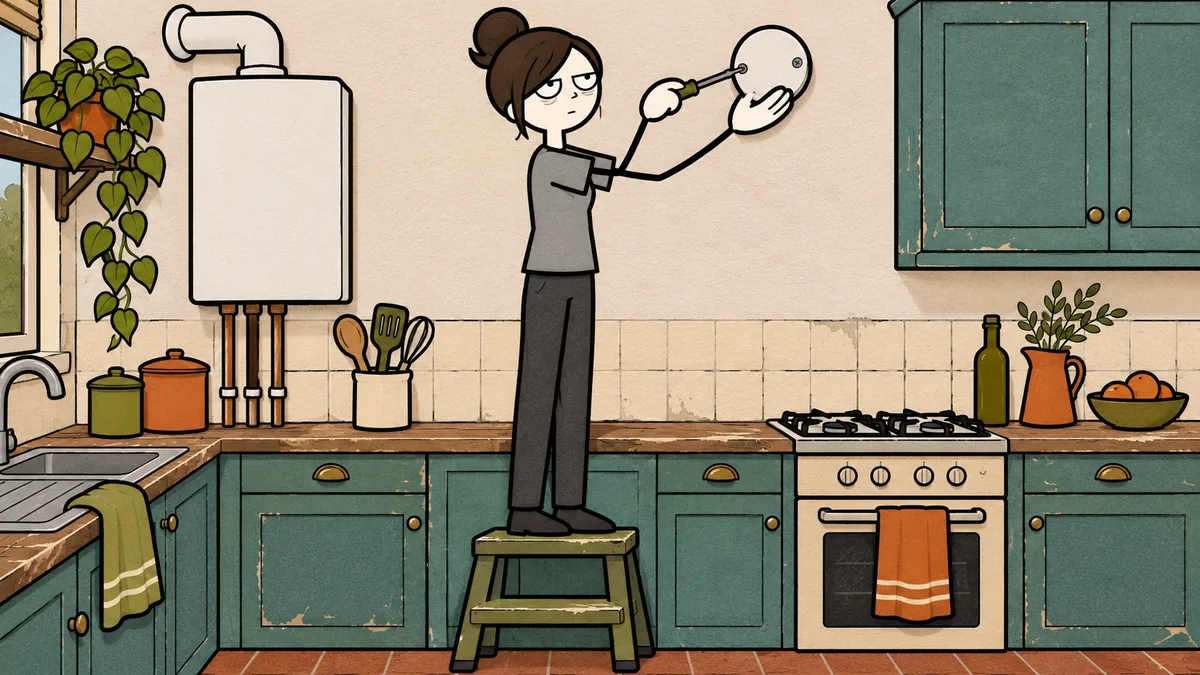
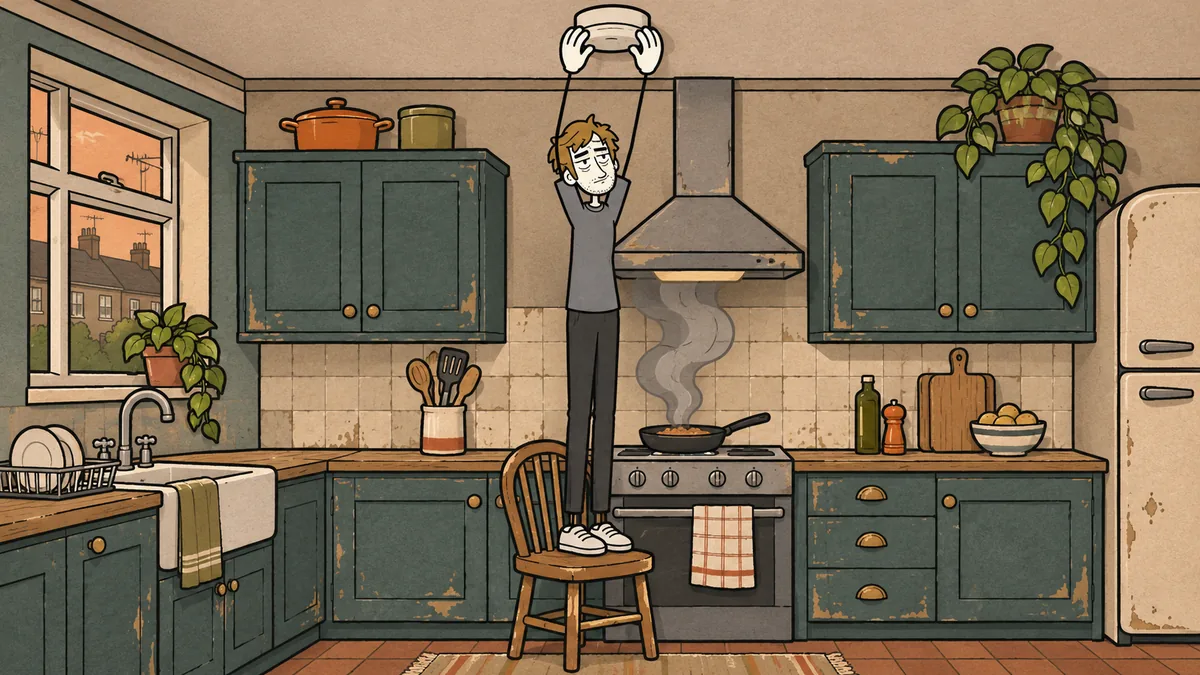
Fit at least one on every level, ideally on the ceiling in the middle of a room, and on the hallway and landing. Fire Kills suggests bedrooms too and a heat alarm in the kitchen, but no smoke alarms in or near kitchens or bathrooms, where smoke or steam can set them off. It calls ten-year sealed battery alarms the best option for most people.
Test by pressing the button until the alarm sounds. Fire Kills says at least monthly; Scottish Fire and Rescue Service and nidirect say weekly. Weekly satisfies everyone. If an alarm chirps regularly, replace the battery immediately, and never take batteries out because it went off by mistake.
Fire Kills says you are around 11 times more likely to die in a fire with no working alarm. A 2022 Home Office leaflet says around 8 times.
Every home in Scotland must have interlinked alarms: a smoke alarm in the room you use most and in every hallway and landing, and a heat alarm in the kitchen. In England, landlords must provide at least one smoke alarm on each storey with living accommodation. Wales and Northern Ireland publish their own guidance.
Make the plan
- Know two ways out where possible: the normal route and a back-up.
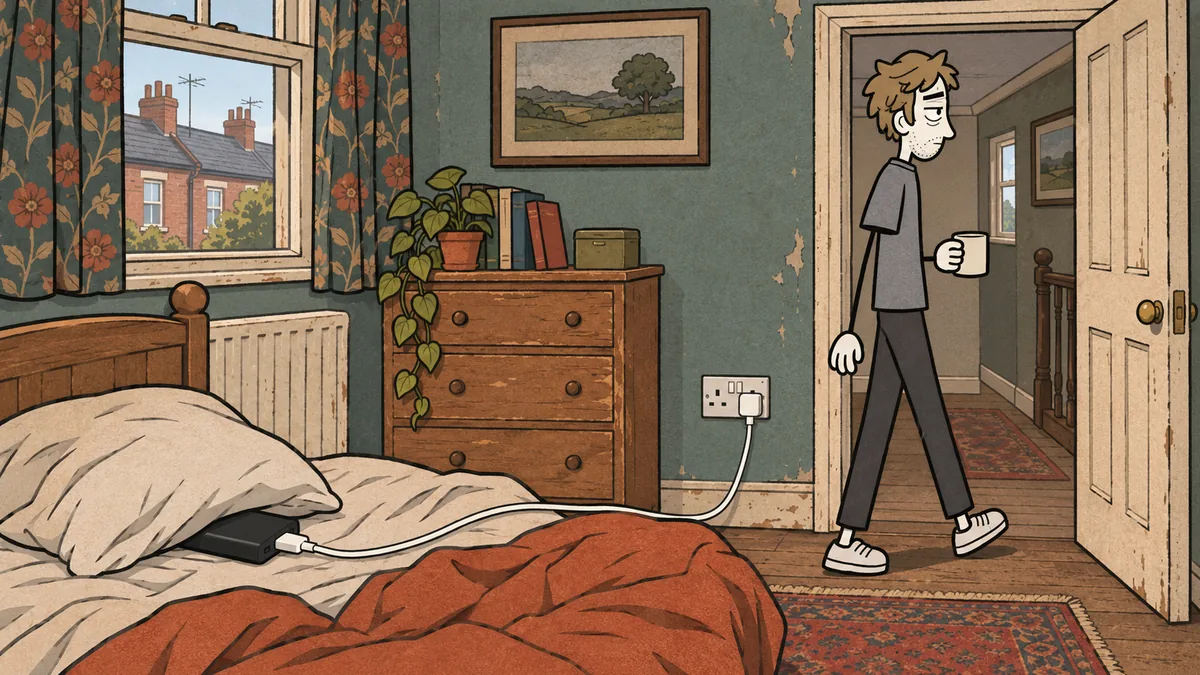
- Keep exits clear, and do not charge e-bikes or e-scooters on your escape route.
- Keep door and window keys near the exits they fit, where everyone can find them.
- Agree a meeting point outside, such as a lamp post.
- Decide who wakes the children, as some may not wake to an alarm, and who helps anyone who needs it.
- Practise, including at night.
If you live in a flat
Your landlord or managing agent should tell you whether your building's plan is to stay put or to leave, so ask now. Under a stay-put plan, London Fire Brigade says to close windows and doors, stay in your flat and call the fire service, leaving if fire, smoke or heat affects you directly. Never use the lift.
If there is a fire
- Get everyone out. Do not stop for valuables or to investigate.
- Close doors behind you.
- In smoke, stay low, where the air is clearer.
- Check a door with the back of your hand. If it is warm, do not open it.
- Call the fire service once you are out, and never assume someone else has.
- Do not go back in. Tell firefighters if anyone is missing.
Most guidance says not to tackle a fire yourself. Fire Kills allows one exception: a very small fire with a clear escape route.
If you are trapped
Get everyone into one room, ideally with a window and a phone. Close the door and pack bedding or towels around the bottom to block smoke. Call the fire service, open the window and shout "HELP FIRE".
The guidance on windows differs. Fire Kills says that on an upper floor you should not jump, but wait for rescue. London Fire Brigade and the Home Office leaflet say that from the ground or first floor you may be able to cushion the fall with bedding and lower yourself down, without jumping. Scottish Fire and Rescue Service says to try a first floor window only if you have no other choice.
At night
You are at greater risk asleep, so make a bedtime check routine. Close inside doors. Unplug appliances not designed to stay on, and check the cooker is off. Do not leave the washing machine or tumble dryer running. Turn heaters off and put out candles and cigarettes. Check the exits are clear. No escape plan includes a detour around the laundry.
The short version
- Fit an alarm on every level and test it weekly, or at least monthly.
- Plan two ways out, keep them clear and practise at night.
- Get out, stay out, call the fire service.
- Trapped: one room, door shut, gap blocked, call the fire service, window.
- Close inside doors at night.
This is general information. Official instructions for your area always come first.
One small job a week
A short email with what's new here and, now and then, one thing to sort out before it goes wrong. It takes minutes, and Harry won't do it.
About one email a week with safety tips and kit ideas. Unsubscribe any time. Privacy notice.
What we read
- Fire Kills, GOV.UK: Detection
- Fire Kills, GOV.UK: Escape
- GOV.UK, Home Office: Fire safety in the home
- GOV.UK, Be Ready: Fires in the home
- GOV.UK: Smoke and carbon monoxide alarm regulations, guidance for landlords and tenants (England)
- London Fire Brigade: Escape plan for houses and converted flats
- London Fire Brigade: Escape plan for flats
- London Fire Brigade: Bedtime checks
- Scottish Fire and Rescue Service: Smoke and heat alarms
- Scottish Fire and Rescue Service: In an emergency
- gov.scot: Fire and smoke alarms, the law
- nidirect: Fire safety and prevention