Ad Links marked (Ad) are affiliate links. As an Amazon Associate I earn from qualifying purchases.
Products here are on topic, but we haven't tested them. Drawings are ours, not photos of the exact product.
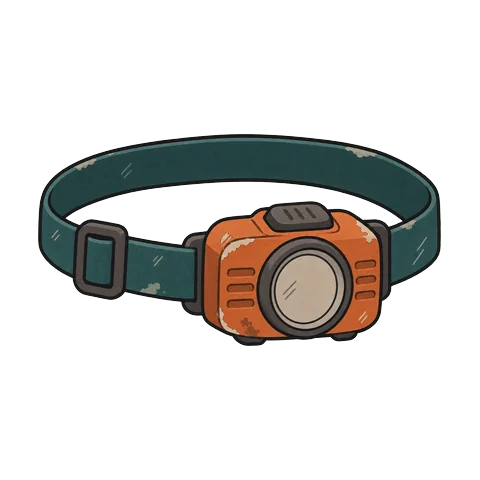
Rechargeable head torch
(Ad) See on Amazon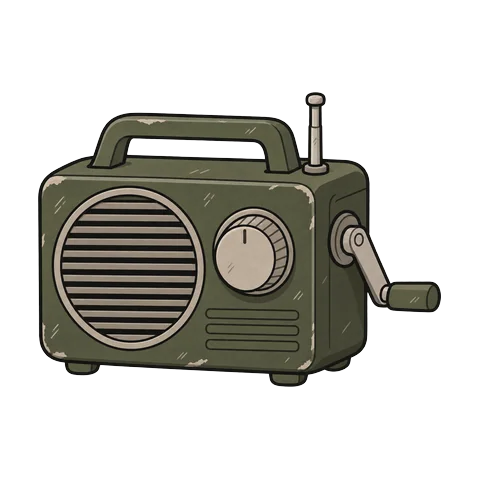
Wind-up emergency radio
(Ad) See on Amazon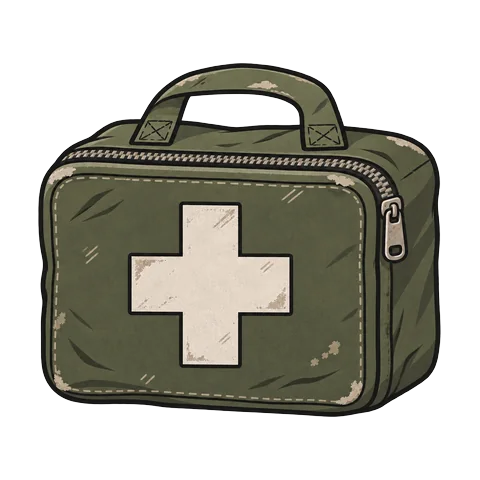
First aid kit
(Ad) See on Amazon
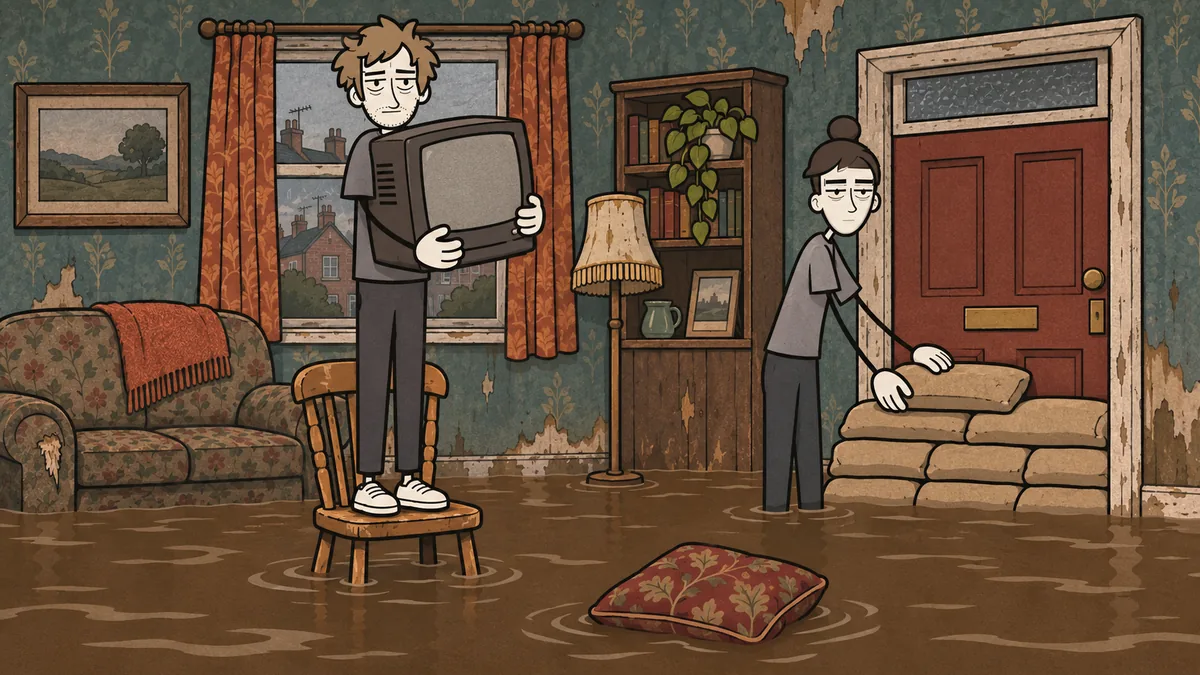
Most emergencies are short-lived, but they can still interrupt power, water, phones or card payments. The government's Be Ready campaign (the old Prepare website now redirects to it) suggests having what you need for three days. The British Red Cross gives the same target and is clear about what it does not mean: no stockpiling, no specialist equipment and no perfect kit.
Water and food
Be Ready asks for 3 litres of bottled drinking water per person per day, with more for cooking and washing. The Red Cross says around 2.5 to 3 litres, rising to around 10 litres if you count basic cooking, washing and hygiene. Three litres satisfies both.
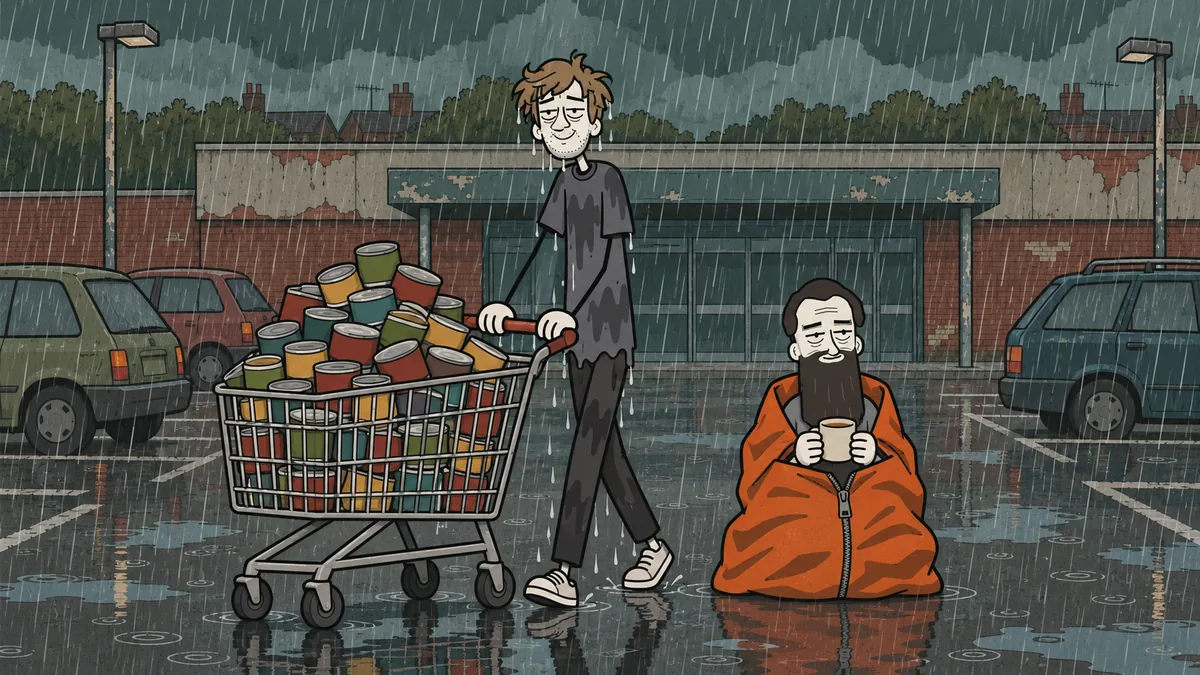
For food, choose things with a long shelf life that need neither a fridge nor a cooker, such as tinned meat, fish or vegetables, dried fruit and nuts, and that your household normally eats. Add a tin opener, or you have a cupboard of decorative metal.
Light, warmth and news
- A torch and spare batteries. Be Ready and the Red Cross both say torches are safer than candles, although nidirect's kit list for Northern Ireland still includes candles and matches.
- Blankets, sleeping bags and warm clothing, because a home can get cold very quickly once the heating stops.
- A battery or wind-up FM radio, with the frequencies of your usual news stations written down.
- A charged power bank for phones and compatible medical devices.
Money, paper and phone numbers
Card payments and cash machines may not work, so keep some cash in coins and notes. How much depends on your household. Keep printed copies of documents such as passports, birth certificates and insurance details, ideally in a waterproof bag, with spare home and car keys and a pen and paper.
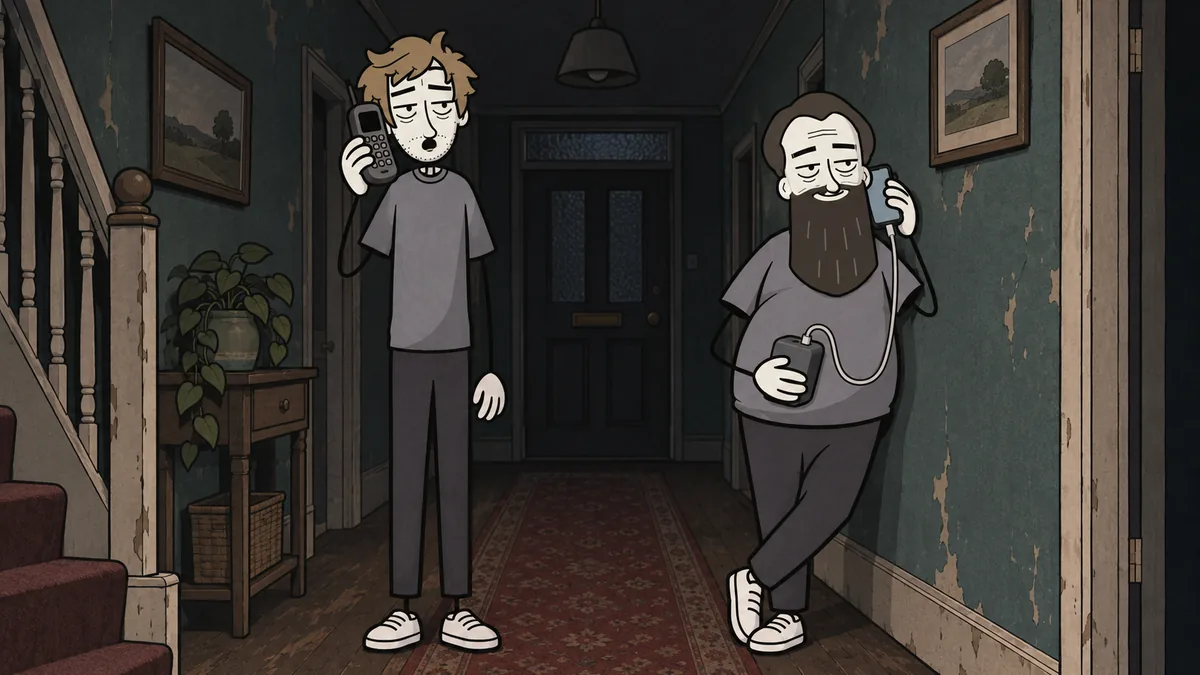
Write down the numbers you would need if your phone died, anyone you would want to check on, your regular medication and doses, and the number for reporting a power cut: 105 in England, Scotland and Wales, 03457 643643 in Northern Ireland.
Health and hygiene
Be Ready suggests a first aid kit with items such as waterproof plasters, bandages, a thermometer, antiseptic, eyewash solution, sterile dressings, gloves, medical tape and tweezers. Keep essential medication and medical supplies too, and leave time for repeat prescriptions: the advice is to request them up to 5 working days before you need the medicine. Add hand sanitiser, wet wipes and bathroom products.
Babies, pets and everyone else
Ready-made formula is best for babies, because you may not be able to boil water to make up powdered formula safely. Add nappies and wipes. Pets need food and water, and the Red Cross adds leads or carriers and any medication. Ready Scotland's list includes spare hearing aids with batteries and mobility devices. Be Ready adds instructions for any medical equipment you rely on.
Building it and keeping it going
Check your cupboards first, note what is missing, and pick up an item or two on normal shopping trips. In a small home, the Red Cross says a bag or cupboard can be enough for the essentials. Set a reminder every six months to check expiry dates and swap anything that needs replacing.
Be Ready also suggests considering a spare bag of essentials in case you are asked to leave quickly. The Red Cross says a camping stove is not a recommended part of a kit, and the NHS says not to use one indoors.
Where you live
Wales points people to the UK government's advice. Scotland and Northern Ireland have their own at Ready Scotland and nidirect. Extra support during outages comes through the Priority Services Register in England, Scotland and Wales, and Customer Care Registers in Northern Ireland.
The short version
- Aim for three days of water, food, light, warmth and medication.
- Allow 3 litres of drinking water per person per day.
- Add a radio, a power bank, cash, paper copies and written phone numbers.
- Build it gradually and check it every six months. Our 3-day checklist has it all as one list you can print.
- If someone is in immediate danger, call the emergency services.
This is general information. Official instructions for your area always come first.
One small job a week
A short email with what's new here and, now and then, one thing to sort out before it goes wrong. It takes minutes, and Harry won't do it.
About one email a week with safety tips and kit ideas. Unsubscribe any time. Privacy notice.
What we read
- GOV.UK, Be Ready: Be ready for emergencies
- British Red Cross: Prepare an emergency kit
- British Red Cross: Prepare your household for 72 hours during an emergency
- Ready Scotland: Make an emergency kit
- nidirect: Household emergency kit
- GOV.WALES: How to prepare for emergencies
- NHS: Carbon monoxide poisoning