Ad Links marked (Ad) are affiliate links. As an Amazon Associate I earn from qualifying purchases.
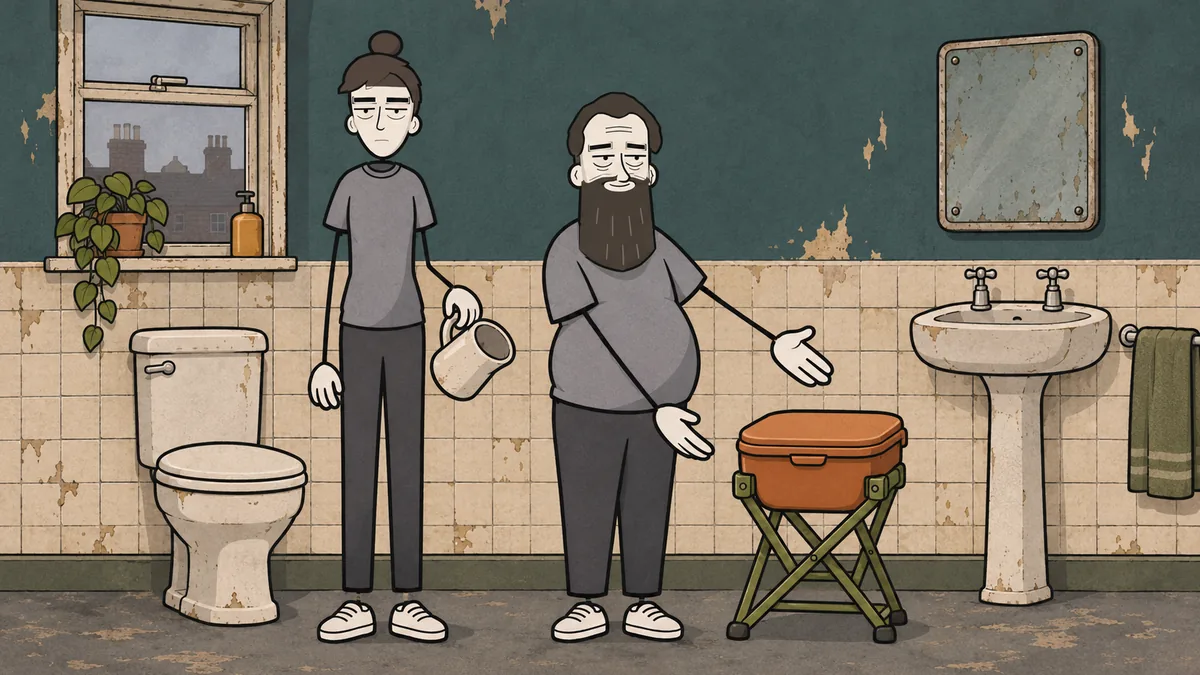
Products here are on topic, but we haven't tested them. Drawings are ours, not photos of the exact product.
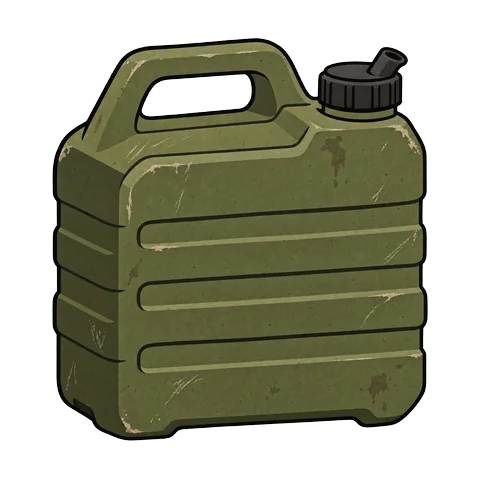
Large water container
(Ad) See on Amazon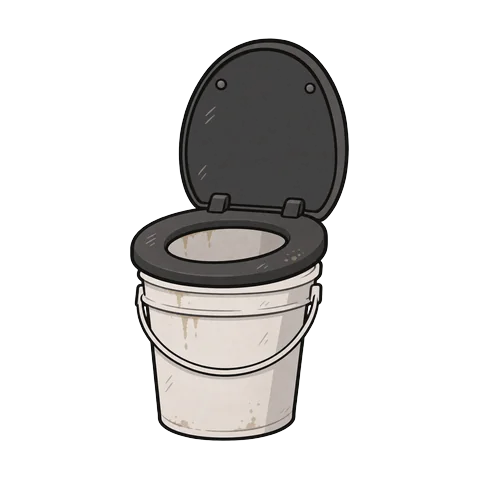
Portable toilet
(Ad) See on Amazon
Most people plan for drinking water when they think about the supply being cut off. Far fewer think about the toilet. Yet without running water the cistern does not refill, and how a household deals with toilet waste quickly becomes a real health question.
One flush, then nothing
When the mains supply stops, whatever is already in the cistern gives you a single flush. After that, the toilet will not refill on its own.
UK water companies such as Bristol Water suggest using a water butt, or some of your stored water if you have enough, to flush: fill a bucket and pour it into the bowl. Keep your drinking water for drinking. If you have containers of stored water, it helps to know in advance which ones are for drinking and which can be used for flushing and cleaning.
When you shouldn't flush at all
A water cut is not always the whole story. After a major disaster such as a large earthquake, emergency planners in Wellington, New Zealand, warn that the wastewater pipes are likely to be damaged even if water still comes out of the tap. In that situation flushing can send waste back up into gardens and homes. Their advice is simple: if the sewer system may be broken, don't flush. Follow what your local water company or council says.
A two-bucket emergency toilet
If you can't use the toilet, the Wellington Region Emergency Management Office describes a simple bucket system:
- Two sturdy buckets of around 15 to 20 litres, each with a lid, clearly labelled.
- One bucket for urine only. Keeping it separate from solid waste keeps the smell down and makes everything safer to handle. At the end of each day, it can be diluted with water and poured onto an unused part of the garden or other green space.
- One bucket for solid waste and toilet paper. If you have no garden, line it with a strong bin bag. After each use, cover the waste with a handful of dry material such as sawdust, dry leaves, soil or shredded newspaper, then close the lid.
A ready-made portable toilet with a seat and lid does the same job in a more comfortable form, and it can sit in the bathroom so that everything stays in one place.
Handwashing matters more than ever
The real risk in all this is germs, not inconvenience. The US Centers for Disease Control and Prevention explains that people often fall ill after germs from faeces reach their hands, and from there their food. Its figures show that handwashing education in communities reduces the number of people who get diarrhoea by 23 to 40 per cent.
So, after every use of an emergency toilet, wash your hands with soap and water. If water is short, Bristol Water notes that hand sanitiser or soap that doesn't need water can help, and wipes can be useful too, but they should never be flushed.
A simple plan before you need it
- Store water, and decide which containers are for drinking and which are for flushing and washing.
- Keep two buckets with lids, bin bags and a dry cover material such as sawdust.
- Have soap and hand sanitiser ready.
- Follow your water company's advice about whether it is safe to flush.
This is general information. Official instructions for your area always come first.
Free: the 3-day kit checklist
Sign up and get our printable checklist of what to keep at home for three days. Then about one short email a week with what's new. It takes minutes, and Harry won't do it.
Get the free checklist and about one email a week with safety tips and kit ideas. Unsubscribe any time. Privacy notice.