Ad Links marked (Ad) are affiliate links. As an Amazon Associate I earn from qualifying purchases.
Products here are on topic, but we haven't tested them. Drawings are ours, not photos of the exact product.
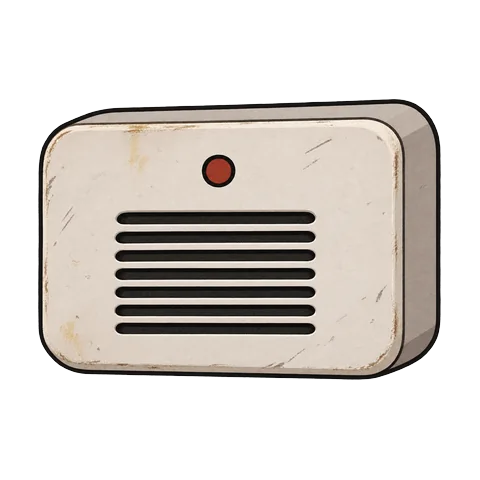
Carbon monoxide alarm
(Ad) See on Amazon
Rechargeable camping lantern
(Ad) See on Amazon
Carbon monoxide (CO) is a poisonous gas made when fuels such as gas, oil, wood and coal do not burn fully. It has no colour, smell or taste, so the Fire Kills campaign says an alarm is the only way to detect it.
Where it comes from
The NHS lists gas boilers, gas cookers and clay ovens, gas or paraffin heaters, wood, gas and coal fires, and portable generators, if not installed properly, faulty or poorly maintained. London Fire Brigade adds blocked chimneys and flues. Engines left running in an enclosed space, such as a garage, can also cause a build-up.
The Health and Safety Executive (HSE) lists warning signs: yellow or orange flames rather than blue (except fuel-effect fires and flueless appliances), soot or staining around appliances, pilot lights that keep blowing out and extra condensation on windows.
Symptoms
The NHS lists a headache, dizziness, feeling or being sick, weakness, tiredness and confusion, chest and muscle pain, shortness of breath, a hot, red face (redness may be harder to see on brown and black skin) and loss of vision. They may come and go, getting worse in the affected room and better outside. The HSE warns they are easily mistaken for food poisoning, a viral infection, flu or tiredness.
What to do
If you suspect CO, the NHS says to stop using the appliance if you can, go outside, and get medical advice as soon as possible. Do not go back in until you have it.
- Get medical advice straight away if you think you might have symptoms (NHS 111 in the UK).
- Call the emergency services or go to A&E if someone may have been exposed and is finding it hard to breathe, has suddenly become confused, has lost consciousness, is feeling weak, or has chest or muscle pain.
- Do not drive yourself to A&E: get a lift or call the emergency services.
- In the UK, call the gas emergency line on 0800 111 999, or 0800 002 001 in Northern Ireland. London Fire Brigade says to call before returning home, even if the source may not be gas.
Sources differ on the order. The NHS and London Fire Brigade put getting out first; the HSE and Scottish Fire and Rescue Service also list switching off appliances and opening windows. If that would delay you, get out first.
Alarms
The NHS advises a loud alarm in each room with an appliance burning gas, oil, coal or wood. London Fire Brigade says to look for EN 50291 certification and an approval mark such as the Kitemark, and to avoid colour-change or black spot indicators. It says you may want one in the bedroom, so that it wakes you.
Follow the manufacturer's instructions on fitting and testing. Northern Ireland's HSE says not to fit one low down, and that lifespans range from one to six years, so check yours. An alarm is a back-up, not a substitute for servicing, which London Fire Brigade advises at least yearly, along with a chimney sweep and flue inspection.
Barbecues, stoves and generators
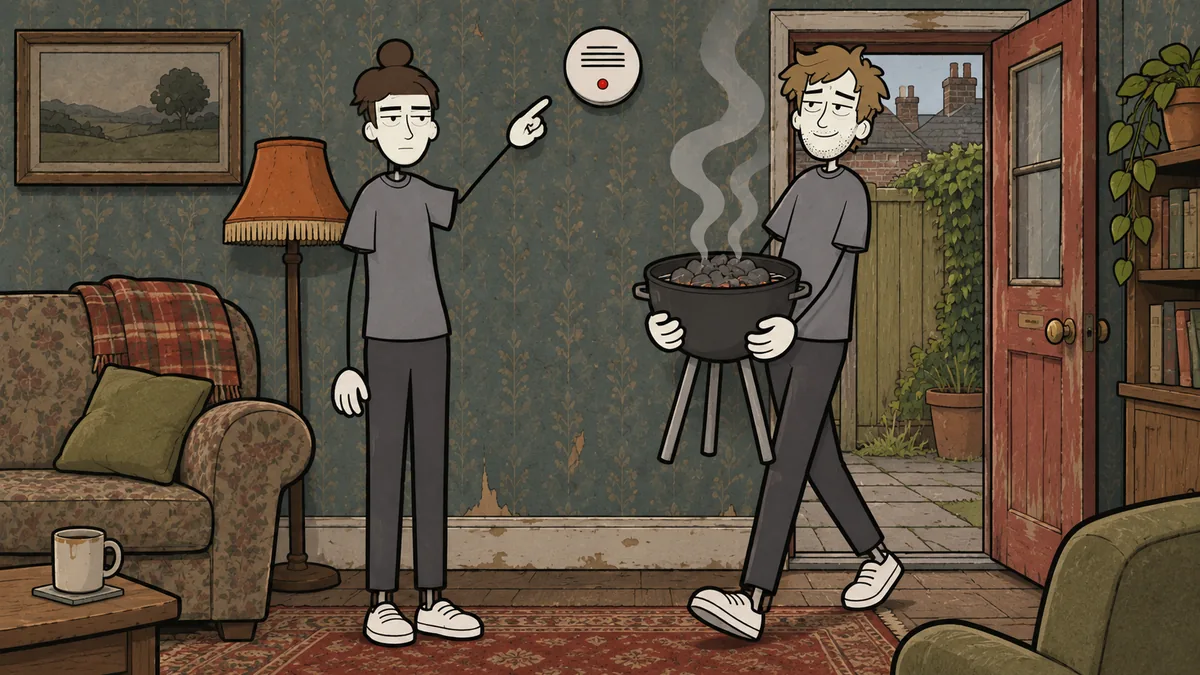
Never use a barbecue or camping stove indoors or in a tent, even to keep warm. London Fire Brigade says an extinguished barbecue can keep producing CO for many hours, so a barbecue that has gone out has not finished. Leave it outside, well away from the building. The UK Health Security Agency says not to run petrol or diesel generators indoors, because the exhaust contains CO.
What the law asks
- England: landlords must provide an alarm in any room used as living accommodation with a fixed combustion appliance, excluding gas cookers.
- Scotland: every home needs one in any room with a carbon-fuelled appliance, excluding gas cookers and hobs.
- Wales: rented homes need one in any room with a gas, oil or solid fuel appliance.
- Northern Ireland: mandatory where a new fossil fuel appliance is installed.
The short version
- Fit audible alarms: CO has no colour, smell or taste.
- If you suspect it, get outside and get medical advice, or call the emergency services for the serious symptoms above.
- Call the gas emergency line before going back in.
- Keep barbecues, camping stoves and generators out of the house.
This is general information. Official instructions for your area always come first.
One small job a week
A short email with what's new here and, now and then, one thing to sort out before it goes wrong. It takes minutes, and Harry won't do it.
About one email a week with safety tips and kit ideas. Unsubscribe any time. Privacy notice.
What we read
- NHS: Carbon monoxide poisoning
- HSE: Carbon monoxide awareness, frequently asked questions
- London Fire Brigade: Carbon monoxide safety
- Fire Kills, GOV.UK: Detection
- Scottish Fire and Rescue Service: Carbon monoxide detectors
- UK Health Security Agency: Flooding and health, advice for the public
- nidirect: Carbon monoxide dangers if camping, caravanning or boating
- HSENI: Carbon monoxide alarms
- HSENI: Carbon monoxide
- GOV.UK: Smoke and carbon monoxide alarm regulations, guidance for landlords and tenants (England)
- gov.scot: Fire and smoke alarms, the law
- GOV.WALES: Carbon monoxide alarms