Ad Links marked (Ad) are affiliate links. As an Amazon Associate I earn from qualifying purchases.
Products here are on topic, but we haven't tested them. Drawings are ours, not photos of the exact product.
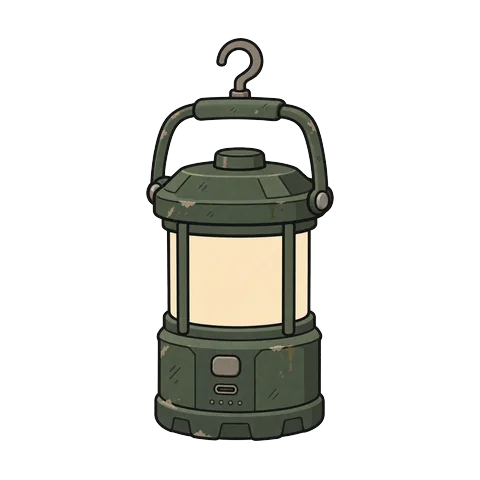
Rechargeable camping lantern
(Ad) See on Amazon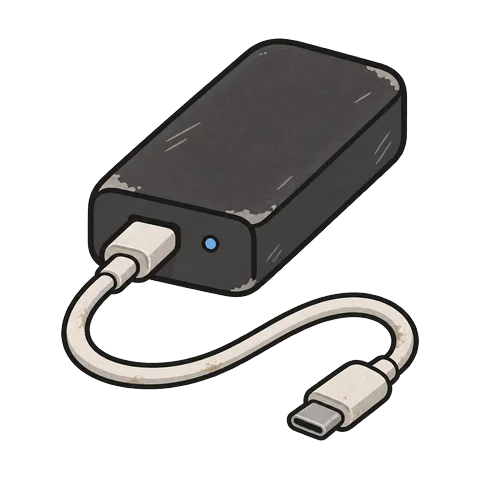
20,000 mAh power bank
(Ad) See on Amazon
A power cut feels like a problem of darkness, so the first instinct is to fix the darkness. For many households that means a drawer full of candles. UK fire services have a different first choice, and the reasons are worth knowing before the next storm.
Light: torches before candles
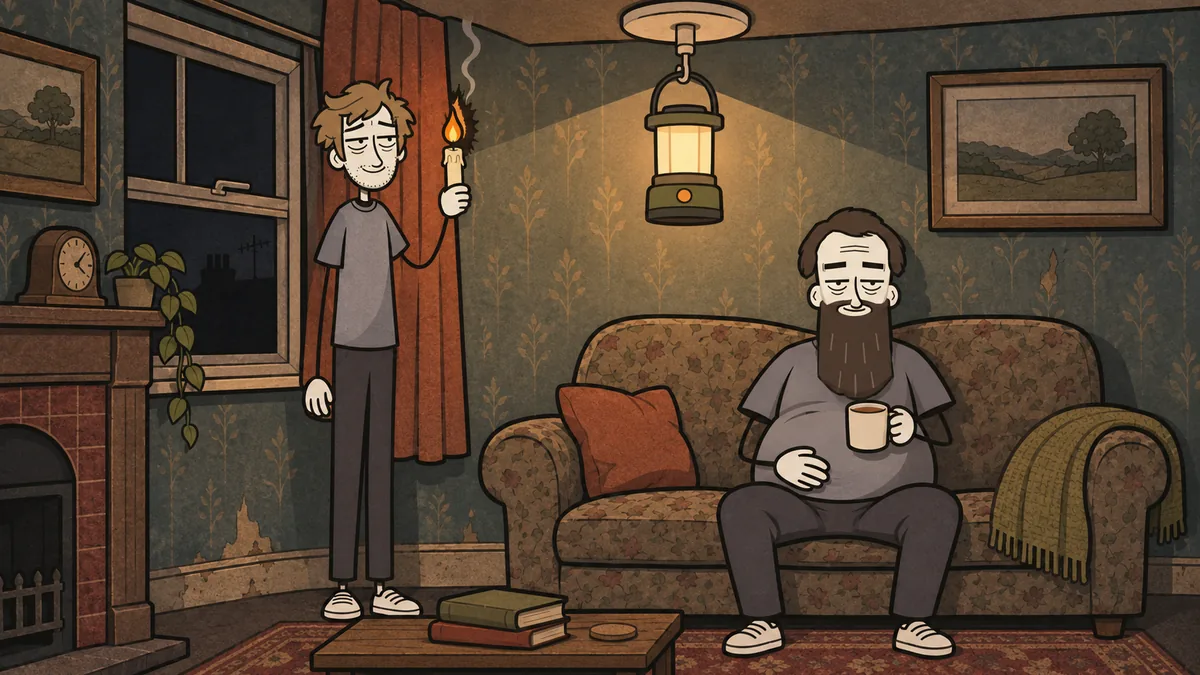
Fire and rescue services in England advise using torches or battery-powered lamps instead of candles during a power cut, because they are safer. If you really have no alternative, they ask you to follow a few rules:
- Put every candle in a proper, heat-resistant holder, on a stable surface.
- Keep candles away from curtains, furniture, books and shelves, and out of draughts.
- Never leave a candle burning in an empty room.
- Put them out before you leave the room or go to sleep.
That last point matters more than it sounds. In a long power cut people are tired, cold and often bored, and it is very easy to fall asleep in a room that is still lit by flames.
A rechargeable lantern is a good middle ground: it lights a whole room, it can hang from a hook or a ceiling fitting, and there is no open flame.
Appliances: switch them off at the wall
When the power goes, many of us leave things exactly as they were. The problem comes when the power returns, perhaps in the middle of the night. Fire services advise turning electrical appliances off at the socket during a power cut, especially anything that heats or cooks, because the supply can come back at any moment while you are asleep, out, or simply not paying attention. Hair straighteners on a bed, a hob with a pan on it, or a heater next to a sofa can all become a hazard the second the power returns.
Cooking and heating: never a barbecue indoors
After Storm Eunice in 2022, Devon and Somerset Fire and Rescue Service reported a worrying rise in carbon monoxide incidents during the power cuts that followed, including one involving a gas barbecue used indoors. Their advice is clear: barbecues are not designed for indoor use and should only be used in well-ventilated outdoor areas. If you use a portable gas or oil heater, keep it at least a metre from people and furniture.
Carbon monoxide is especially dangerous because, as the NHS explains, it has no colour and no smell, so you cannot tell when it is building up. If you start to feel unwell and suspect carbon monoxide, the fire service says to call the emergency services straight away.
Reporting the power cut
Network operators take power cut reports on 105, which also covers damage to their equipment. Calling uses battery, so a charged power bank is worth having in the cupboard for exactly this kind of night: it keeps a phone alive long enough to report the fault, check updates and stay in touch.
A short checklist
- Torches or a rechargeable lantern, charged and easy to find in the dark.
- A charged power bank for your phone.
- Appliances off at the wall as soon as the power goes.
- No barbecues, camping stoves or other fuel-burning heaters used for cooking or heating indoors.
- If candles are the only option: proper holders, away from anything that can burn, and never left alone.
This is general information. Official instructions for your area always come first.
One small job a week
A short email with what's new here and, now and then, one thing to sort out before it goes wrong. It takes minutes, and Harry won't do it.
About one email a week with safety tips and kit ideas. Unsubscribe any time. Privacy notice.