Ad Links marked (Ad) are affiliate links. As an Amazon Associate I earn from qualifying purchases.
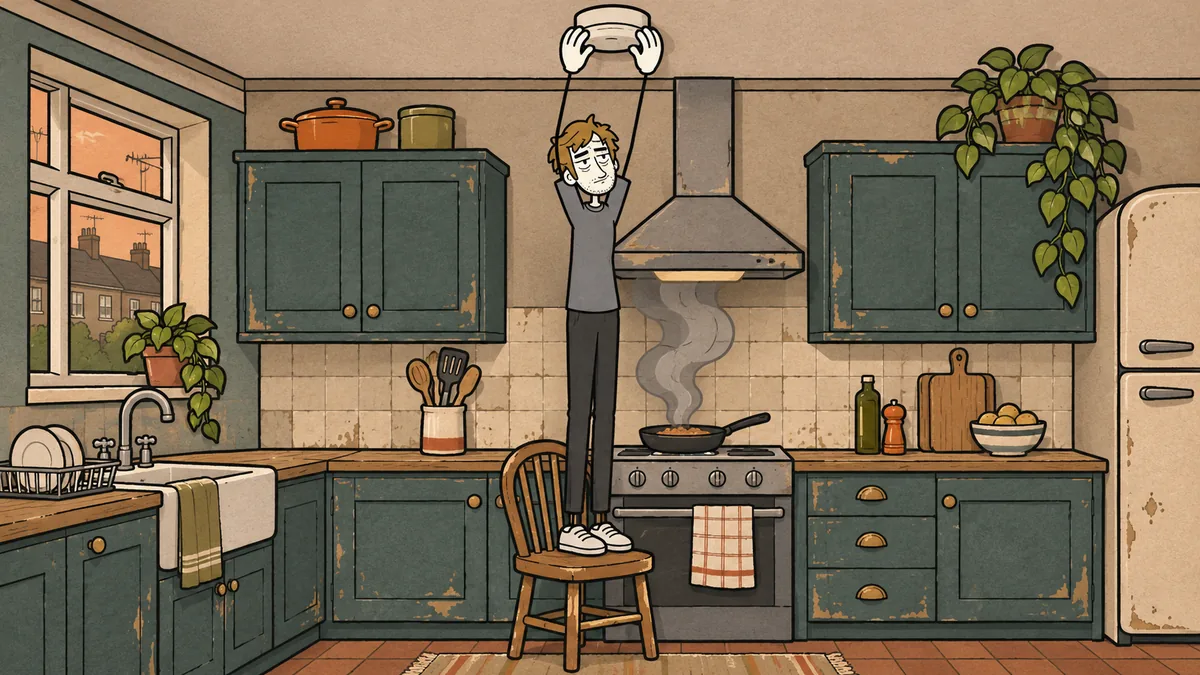
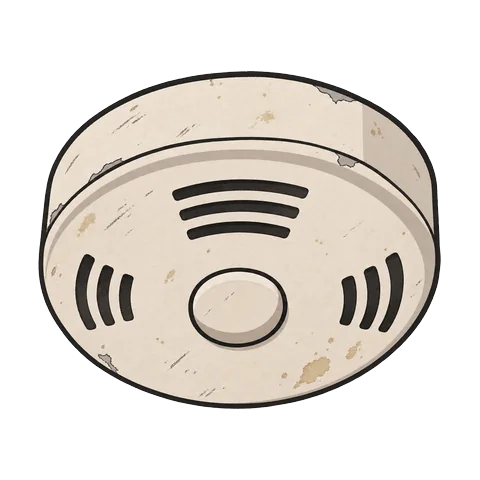
Products here are on topic, but we haven't tested them. Drawings are ours, not photos of the exact product.
Smoke alarm
(Ad) See on Amazon
The Fire Kills campaign says that in more than a third of home fires, smoke did not reach an alarm in time to raise the alert. London Fire Brigade is blunter: "A single smoke alarm isn't enough." So choosing well means picking the right types, then enough of them.
Optical, ionisation or heat
Optical alarms use a light sensor to spot smoke particles. They were long associated with slow, smouldering fires, but Which? now calls them a good choice for most rooms other than the kitchen.
Heat alarms ignore smoke and respond to temperature. Which? says they trigger above 58°C, generally when a fire is well established. Scottish Government guidance says they operate later than smoke alarms, so use them only where a smoke alarm would give false alarms, such as a kitchen. England's guidance says they are no replacement for smoke alarms.
Ionisation alarms are where sources disagree. Which? says they are being phased out and should be replaced with optical alarms at the end of their life. Shropshire Fire and Rescue Service still describes them as quick on flaming fires and says fitting both types gives the strongest protection.
Where each belongs
Fire Kills says to fit at least one on every level, ideally on the ceiling in the middle of a room, and on the hallway and landing. It suggests bedrooms too. Do not put smoke alarms in or near kitchens or bathrooms, where smoke or steam can set them off. A heat alarm goes in the kitchen. Scottish Fire and Rescue Service advises keeping alarms 30cm from walls, lights, doors and vents, and checking you can hear them in every room with the doors closed.
Sealed ten-year batteries
Fire Kills recommends these for most people, as one-year batteries are easy to forget. After ten years the whole alarm is replaced, possibly sooner depending on how often it has gone off. Which? suggests writing the fitting date and replacement date on it. Mains alarms suit larger homes and need a qualified electrician.
Fire Kills says to test at least monthly; Scottish Fire and Rescue Service and Which? say weekly. Weekly satisfies both.
Standards and marks
Look for BS EN 14604 on smoke alarms and BS 5446-2 on heat alarms. Fire Kills points to the Kitemark and Loss Prevention Certification Board symbols; London Fire Brigade accepts a current British Standards or CE mark.
Which? says eight of its nine Don't Buy alarms came through online marketplaces, unbranded or carrying the seller's name, so choose a brand you recognise and check who is selling it. If unsure, ask your local fire and rescue service, which may even be able to provide alarms. Strobe and vibrating-pad alarms exist for people who are deaf or hard of hearing.
Interlinked alarms
Interlinked means that when one goes off, they all go off. Which? says alarms link to related models from the same manufacturer, so buy your smoke and heat alarms as one system. They link by wires or radio and, Scottish Fire and Rescue Service says, need no wi-fi. A wi-fi smart alarm is a different thing: it alerts your phone, and Which? lists one that can't be linked at all.
The rules differ across the UK:
- Scotland: every home must have a smoke alarm in the room used most, one in every hallway and landing, and a heat alarm in the kitchen, all on the ceiling and interlinked. Guidance allows mains alarms with battery back-up or tamper-proof long-life lithium ones, not user-replaceable batteries. Owners are responsible, and landlords for private tenants.
- England: landlords must fit at least one smoke alarm on each storey with living accommodation. The type is not specified.
- Wales: rented homes need one on every storey, connected to the electrical supply and interlinked.
- Northern Ireland: private landlords must fit interlinked smoke and heat alarms, hard-wired or sealed.
The short version
- Fit smoke alarms on every level and a heat alarm in the kitchen.
- A sealed ten-year battery means one less job to forget.
- Look for BS EN 14604, BS 5446-2 and an approval mark, from a brand you recognise.
- Interlinking is required in every Scottish home and some rented homes elsewhere.
- Test weekly, or at least monthly.
This is general information. Official instructions for your area always come first.
Free: the 3-day kit checklist
Sign up and get our printable checklist of what to keep at home for three days. Then about one short email a week with a small job to do. It takes minutes, and Harry won't do it.
Get the free checklist and about one email a week with safety tips and kit ideas. Unsubscribe any time. Privacy notice.
What we read
- Fire Kills, GOV.UK: Detection
- GOV.UK, Home Office: Fire safety in the home
- London Fire Brigade: Smoke alarms and heat alarms
- Scottish Fire and Rescue Service: Smoke and heat alarms
- gov.scot: Fire and smoke alarms, the law
- gov.scot: Satisfactory fire and carbon monoxide detection, tolerable standard guidance
- GOV.UK: Smoke and carbon monoxide alarm regulations, guidance for landlords and tenants (England)
- GOV.WALES: Fitness for human habitation, guidance for tenants
- legislation.gov.uk: Smoke, Heat and Carbon Monoxide Alarms for Private Tenancies Regulations (Northern Ireland) 2024
- Which?: Smoke alarms and heat alarms
- Shropshire Fire and Rescue Service: Smoke alarms and detectors