Ad Links marked (Ad) are affiliate links. As an Amazon Associate I earn from qualifying purchases.
Products here are on topic, but we haven't tested them. Drawings are ours, not photos of the exact product.
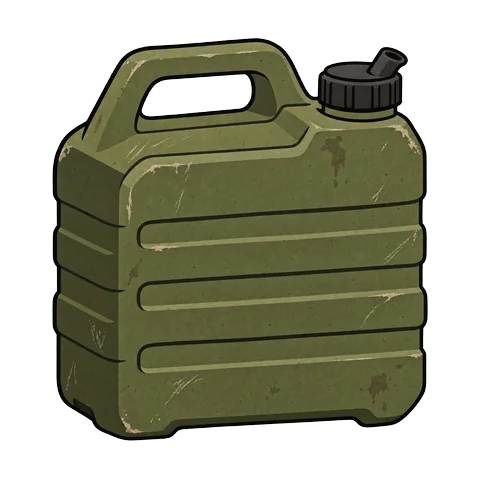
Large water container
(Ad) See on Amazon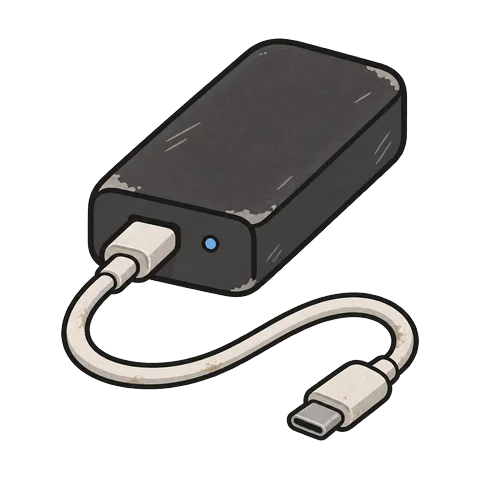
20,000 mAh power bank
(Ad) See on Amazon
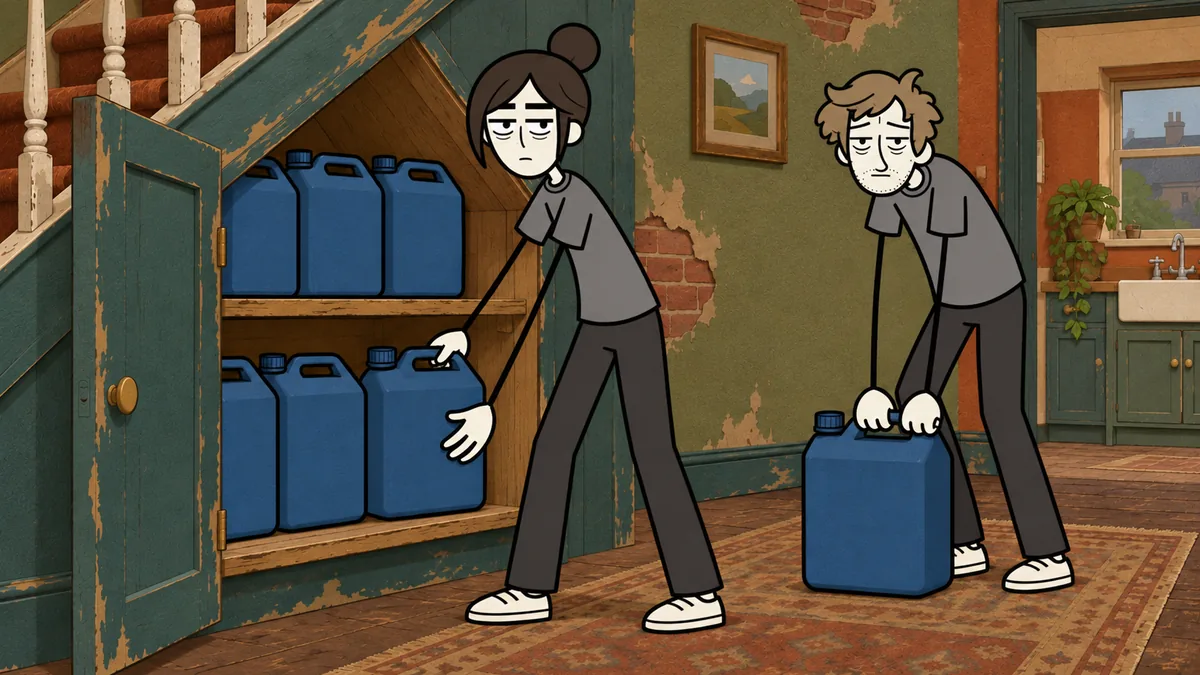
Tap water in the UK is safe to drink without boiling, and most interruptions are over quickly. Longer ones are easier to sit out with water in the cupboard.
How much to keep
The government's Be Ready campaign recommends 3 litres of drinking water per person per day for three days, so 9 litres each, plus extra for baby formula, medical devices and pets. The British Red Cross says around 2.5 to 3 litres a day, or around 10 if you count basic cooking, washing and hygiene.
In a prolonged incident, Welsh Water says it will make at least 10 litres per person per day available within the first 24 hours, generally at collection points rather than your door.
How to store it
Be Ready calls bottled water the safest way to prepare. Welsh Water says commercially bottled water has a long shelf life and mainly needs a cool, dark place, following the manufacturer's instructions. A Water UK note for water companies' own stock adds: away from direct sunlight and strong-smelling chemicals, never outside, with a shelf life usually of 2 years at most. The garage shelf beside the weedkiller is not what anyone had in mind.
If someone at home is on dialysis, Welsh Water asks you to check the mineral content of bottled water with their medical team.
Filling your own containers
Before a planned interruption, South West Water and Bristol Water say there is no need to buy bottled water: fill bottles or containers from the tap, ideally that morning. Use clean containers, and never one that has held chemicals such as fuel or paint.
We found no official UK figure for how long tap water keeps in a home-filled container, so we do not give one. The only limit we found is short: boiled water kept in the fridge under a boil notice should be discarded after 24 hours. For anything longer, ask your water company.
Rotating it
Be Ready suggests a reminder every six months to check dates and swap anything that needs replacing. Use the oldest first.
If the supply stops
Check your water company's website for updates and collection points. If you are on the Priority Services Register, your company should arrange alternative supplies. Keep stored water for drinking, washing hands and preparing food. Be Ready says soft and fizzy drinks are also safe, but not milk or fresh fruit juice that smells off.
If the water may be unsafe
If your water company, or your council for a private supply, issues a boil notice, the Drinking Water Inspectorate says to boil water before drinking it, brushing teeth, making ice, preparing food, cleaning feeding equipment or giving it to pets. Bring it to a rolling boil and let it cool naturally, taking care not to scald yourself. You can still shower if you keep it out of your mouth, wash dishes in hot water and dry them thoroughly, wash clothes and flush. Notices vary: Scottish Water asks for cooled boiled water for dishes and worktops too, so follow yours. If you are told to stop using the water altogether, use bottled water or the supply your company provides.
After a flood, GOV.UK says not to use tap water that has changed in colour, taste or smell, and to contact your water company.
Do not drink rain butt water as it is: Be Ready says it could contain bacteria or disease. If safe drinks run out, boiling or purification tablets can make other water safer, and most sources need filtering first. The Chief Medical Officers' scripts for a national power cut allow filtered, disinfected rainwater at that point, and describe a bleach method with exact amounts. Read those rather than guessing.
For babies, Be Ready says ready-to-feed formula is safest and bottled water is not usually recommended for mixing powder.
The short version
- Keep 3 litres per person per day for three days, ideally sealed and bottled.
- Store it cool and dark, away from chemicals, and check it every six months.
- Under a boil notice: rolling boil, cool, fridge, and discard after 24 hours.
- Never drink untreated rain butt water.
This is general information. Official instructions for your area always come first.
One small job a week
A short email with what's new here and, now and then, one thing to sort out before it goes wrong. It takes minutes, and Harry won't do it.
About one email a week with safety tips and kit ideas. Unsubscribe any time. Privacy notice.
What we read
- GOV.UK, Be Ready: Water supply interruptions or outages
- GOV.UK, Be Ready: Be ready for emergencies
- Drinking Water Inspectorate: Receiving a boil water notice
- GOV.UK, UK Chief Medical Officers: Water and sanitation scripts for a national power outage
- GOV.UK: What to do after a flood
- British Red Cross: Prepare an emergency kit
- Dwr Cymru Welsh Water: Help and support during an incident
- Scottish Water: Water supply FAQs
- South West Water: Preparing for an incident
- Bristol Water: Preparing for an incident
- Water UK: Technical guidance note 11, storage and use of bottled water